Next-Generation Sequencing
As the name suggests, NUSeq is primarily a next-generation sequencing (NGS) core facility. Providing first-class NGS technology to the Northwestern research community is a main focus of the core. NUSeq has a fleet of NGS sequencers that spans all major Illumina sequencing technologies. Thousands of sequencing libraries have been constructed and sequenced encompassing all major NGS applications, from RNA-seq to sequencing of CRISPR/Cas9 gene editing products.
Major Short Read Sequencers
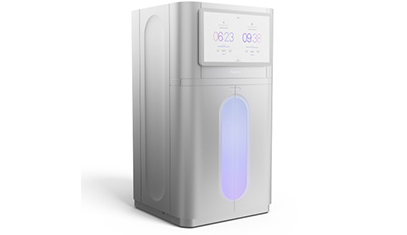
Illumina NovaSeq X Plus
- Top data throughput, cost effective
- Three flow cell types at different throughput levels:
- 25B flow cell: 2,000-2,500 million* reads per lane, 8 lanes per flow cell. Read length available: 2x50 and 2x150 bases. Sequencing on this flow cell is the most cost effective among all NUSeq sequencers at <$3 per Gbp
- 10B: 900-1,000 million reads per lane, 8 lanes per flow cell. Read length available: 2x50 and 2x150 bases
- 1.5B: 600-700 million reads per lane, 2 lanes per flow cell. Read length available: 2x50 and 2x150 bases
- More technical specifics from Illumina
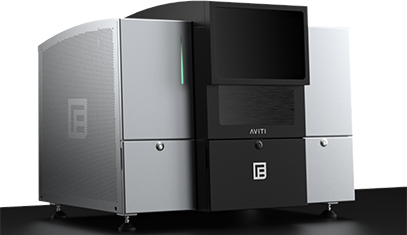
Element AVITI
- Intermediate throughput, quick turnaround time
- Read length and output:
- 2x75 and 2x150 bases: 400-500 million reads (Medium Output), 800-1,000 million (High Output), per flow cell (2 lanes)
- 2x300 bases: 100 million reads (Medium Output), 300 million (High Output), per flow cell (2 lanes)
- Accuracy: Equivalent to other short read sequencing platforms. UltraQ mode achieves Q50
- More technical specifics from Element Biosciences
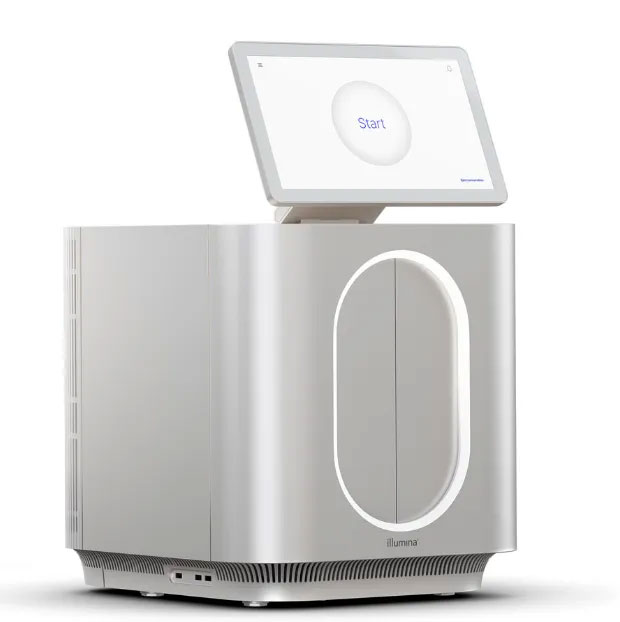
Illumina MiSeq i100 Plus
- Low throughput, quick turnaround time
- 5, 25, 50, to 100 million reads from one flow cell with throughput depending on flow cell type, no separable lanes
- Read length available: 2x300 and 2x500 bases
- More technical specifics from Illumina
* For paired end sequencing, this represents the total number of read pairs. In this case, the actual total number of reads doubles if reads from the two ends are counted separately. This note applies to all sequencers.
Long Read Sequencers
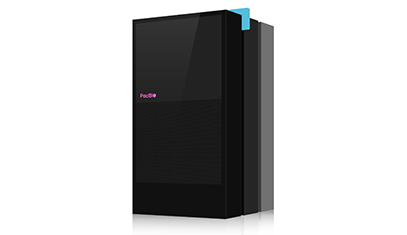
PacBio Revio
- Sep'26 Update: Multi-use SMRT cell significantly lowers sequencing costs
- Read length: Typically in the 15-20 kb range
- Read accuracy: Q30-Q40+
- Data throughput: Up to 120 Gb data per SMRT cell (or per acquisition with the multi-use SMRT cell) with the latest SPRQ chemistry
- Native epigenetic detection: 5hmC, 5mC, and 6mA calling at no additional costs
- Visit the PacBio Revio page for more technical specifications.
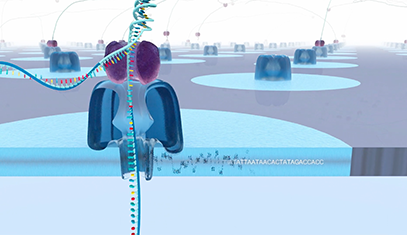
Oxford Nanopore
- Read length: 10-100 kb for long-read sequencing, and 100-300 kb for ultra-long read sequencing mode. 4 Mbp is the current record
- Read accuracy: Q20-Q30+
- Data throughput:
- PromethION: 50-100 Gb data per flow cell
- MinION: 10-20 Gb data per flow cell
- Simultaneous detection of epigenetic modifications with primary sequence
- Visit the Oxford Nanopore Technologies PromethION and MinION page for more technical specifications.
We are constantly evaluating sequencing technology needs for Northwestern researchers. If you have needs for other sequencing platforms, please contact us.
Review Our NGS Quick Guide Review Our Sequencer Selection Guide
Projects
NUSeq supports all NGS-based research projects. Major types of NGS applications including the following:
NGS Project Workflow

1. Consultation

2. Sample Submission

3. Sample QC

4. Library Prep

5. Sequencing

6. Bioinformatics
Contact Us
To initiate a new NGS project, please call or email core director Xinkun Wang, PhD, at 312-503-3331 or xinkun.wang@northwestern.edu.